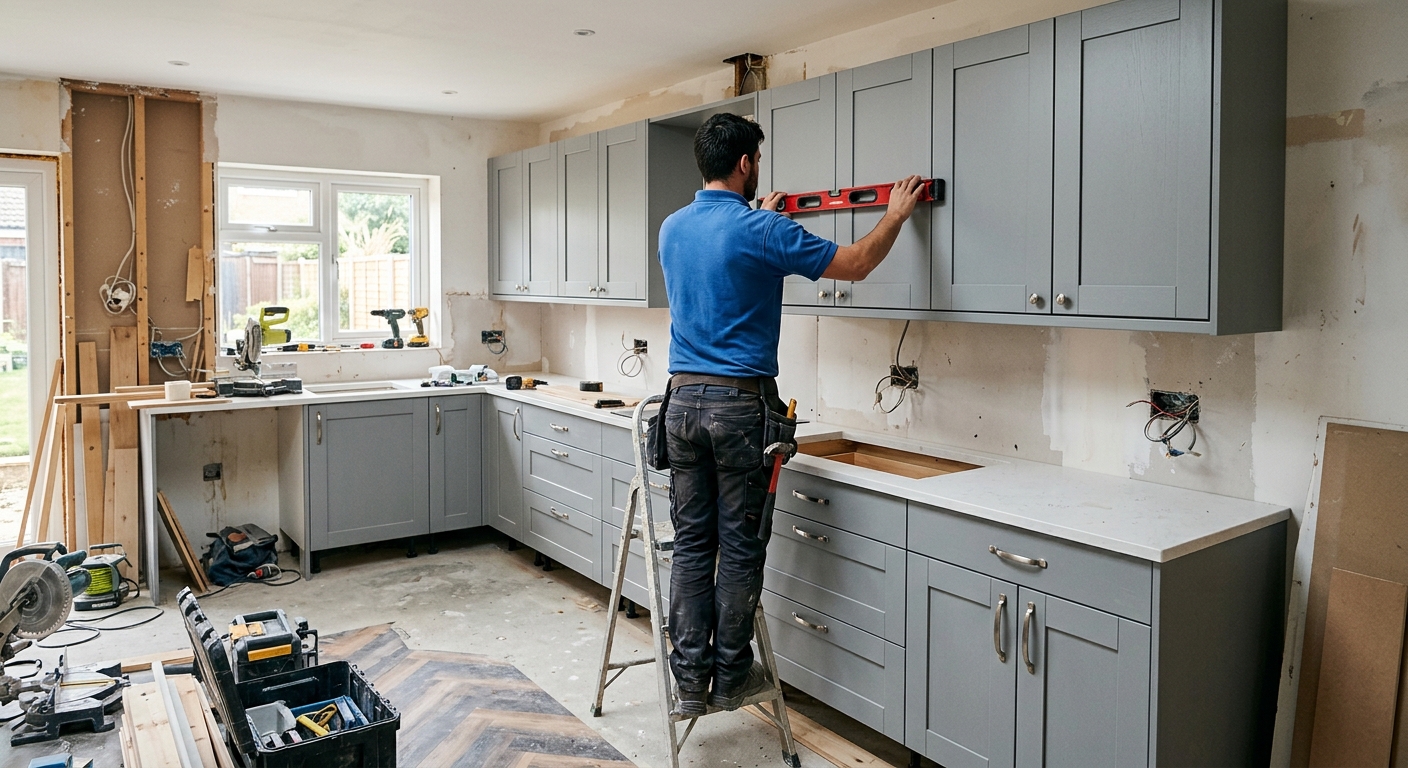
Plan a DuBois kitchen renovation without paying for work twice
If you are improving a DuBois kitchen in stages, the order of work matters as much as the materials. Start by separating repairs from appearance changes. A leaking sink connection, damaged cabinet base or appliance that no longer fits your needs deserves a decision before new finishes are ordered. Ask a contractor to map which improvements can stand alone and which depend on later work.
Decide what is worth keeping
Make a simple inventory of cabinets, counters, flooring, appliances and lighting. Mark each item keep, repair or replace, with a reason. Existing cabinets may remain useful if their condition and storage arrangement meet your needs; have the installer assess them before committing to new doors or a countertop.
Compare a focused refresh with cabinet replacement using the same appliance plan. A refresh proposal might include specified cabinet repairs, new hardware and a finish sample. A replacement proposal should identify cabinet sizes, fillers, finished ends and disposal. Neither proposal is complete if it ignores how the sink, dishwasher and adjoining floor will be handled.
Sequence a phased project
Consider the final layout before buying surfaces sized for the current one. If cabinets will change soon, ask whether an interim countertop is worth purchasing. If the floor will change later, ask how that future work will meet the cabinets and affect appliance removal. Put these decisions on a drawing so separate contractors can work from the same assumptions.
Before ordering a refrigerator or range, compare the manufacturer's installation dimensions with the measured opening and delivery route. Include door swings, handles and the space needed to use nearby drawers. Have the appropriate trade review proposed electrical, gas or ventilation changes rather than assuming the old connection suits a new model.
A practical estimate separates the work needed now from optional later stages. Request distinct amounts for removal, installation, surface repairs, utility work and cleanup. For an undecided product, ask what the allowance includes and how any difference will be charged. Keep the selected model numbers with the proposal.
Ask local questions before demolition
The City of DuBois Code Enforcement page identifies the department responsible for permits and inspections and links to permit applications. Give the office your exact address and project description to confirm the process for your property. Ask the contractor to record who handles applications and required inspection appointments.
If the home predates 1978 and the project disturbs painted surfaces, review EPA's lead-safe renovation guidance before work starts. Discuss containment, cleanup and access to the kitchen with a suitably qualified contractor. The age of a house alone does not establish the condition of a particular cabinet or wall.
Choose a contractor for the actual job
For a modest refresh, ask to see comparable repair and finish work. For cabinet replacement with multiple trades, ask who coordinates the plumber, electrician and installer. Request current insurance information, references and a written scope. Use the Pennsylvania contractor verification guidance to check registration, while recognizing that registration does not endorse workmanship.
DuBois kitchen project questions
Can I replace the countertop first?
Yes, if retaining the cabinet layout is a deliberate choice and the installer accepts the existing support conditions. If cabinet replacement is planned, compare the combined project before purchasing a counter that may not suit it.
Will a phased remodel always save money?
No. Separate phases can involve repeat visits, protection and removal work. Ask bidders to compare a combined scope with the proposed stages so you can weigh cash flow against repeated labor.
Should I keep working appliances?
Keep them if their dimensions and condition suit your plan. Record their specifications and discuss future replacement access before cabinets and countertops are finalized.
How do I control change orders?
Require a written description, price and schedule effect before approving added work. Ask for photographs or an explanation of the discovered condition and available options, especially when the change uses your contingency funds.