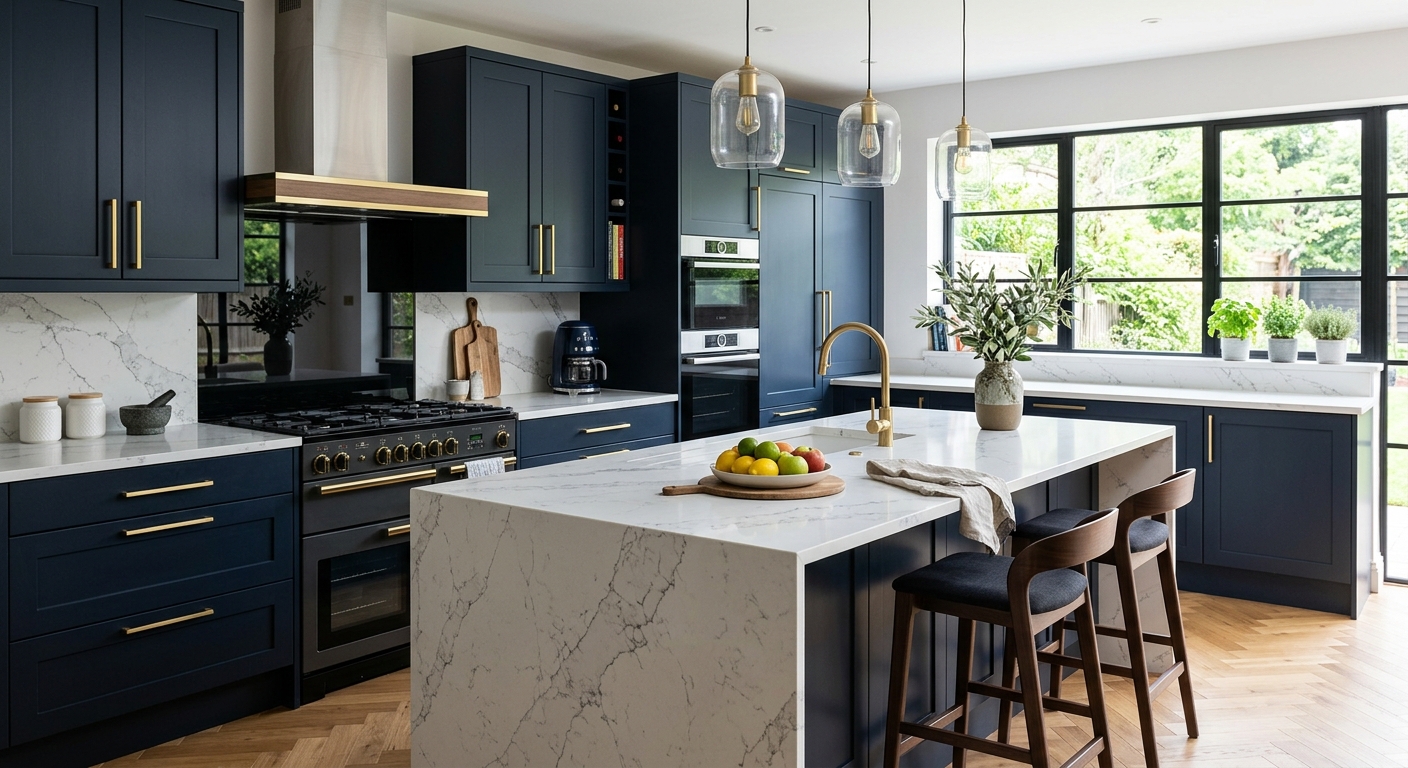
What a kitchen remodel costs in Spring Garden
In Spring Garden Township, full kitchen remodels cover a considerable price spread—directly tied to this area's strong homeownership rate of 83.8% and median household income of $93,914 (U.S. Census Bureau, ACS 2024). Owners here, not landlords, drive the renovation market, and most prioritize investments that are sensible for long-term living. Much of the housing stock comes from York County’s Post‑World War II tract housing boom, especially in neighboring Springettsbury and West Manchester. That era’s homes often have tight galley layouts and outdated wiring, so projects frequently involve opening up floor plans and boosting electrical capacity to modern standards.
It is easy for budgets here to overrun when homeowners price their kitchen based on just new counters or cabinets—then discover they need structural changes or all-new mechanicals. The fastest way to overspend is to price for “pull and replace” but then decide midcourse to take out a wall or move appliances. Below, see what typical projects in Spring Garden entail.
| Scope |
What's included |
Duration |
Price range |
| Full gut remodel, same layout |
cabinets, counters, appliances, flooring, lighting, fixtures |
6–10 weeks |
$31,500–$125,500 |
| Gut plus layout change |
all of the above plus moved plumbing, electrical, walls |
10–16 weeks |
$68,000–$125,500 |
| Cabinet replacement (stock to semi-custom) |
remove and install cabinets, hardware, patching |
1–3 weeks |
$7,300–$31,500 |
| Cabinet refacing |
new doors and drawer fronts, veneer, hardware |
3–6 days |
$7,300–$21,000 |
| Countertop replacement only |
template, fabricate, install, reconnect sink |
1–3 weeks |
$4,200–$16,500 |
| Kitchen flooring only |
remove existing, install new flooring |
3–6 days |
$5,200–$21,000 |
Estimates for a typical Spring Garden kitchen. Cabinet grade and whether the layout changes move these figures more than square footage.
Four kinds of kitchen project, four budgets
The phrase “kitchen remodel” means everything from new paint to a full gut renovation. In Spring Garden, where housing stock varies from tight 1950s galley layouts to larger late-90s kitchens, project scope matters more than the square footage. Deciding your tier saves your budget and your patience—most blown budgets start with “I just want new cabinets” and blow up when the scope creeps midstream.
- Cosmetic refresh: Paint, new hardware, updated lighting, and maybe a tile backsplash. No cabinets or layout changes. Cheapest, quickest, and disrupts daily life the least. Think of it as a facelift, not surgery.
- Pull and replace: New cabinets and counters, but everything goes in where the old pieces sat. The plumbing and electrical stay mostly where they are. Cost-effective but limited—no new storage solutions or open spaces.
- Gut, same layout: Everything out, down to the studs. New electrical, plumbing, insulation—but no major relocations. Good if wiring or pipes are 50 years old but you’re happy with the footprint.
- Layout change: Moving walls, rerouting plumbing, adding windows—this is where budgets climb. Engineering and permits are a given. This option is popular for postwar galley kitchens that feel boxed-in, especially in the tract developments north and west of York.
The biggest cost jump is moving from gutting in-place to changing the layout. Moving the sink or range requires professional trades, mechanical permits, and plan reviews—costs that do not apply if you keep everything in its lane. Before calling a contractor, decide which of these four describes what you really want. Until you settle your tier, any estimate you get is just noise; no contractor with experience in Spring Garden can price a project blindly.
Choosing cabinetry
Cabinets are the backbone of the budget in almost every Spring Garden kitchen. Four routes are available, and the right choice saves thousands.
Refacing your current cabinets involves leaving the boxes in place and swapping out doors, drawer fronts, and the visible sides. It makes sense when what’s there is solid, square, and laid out the way you like. It will not fix poor storage or add new features, but it can transform appearances for much less than full replacement.
Stock cabinets come in set sizes and finishes—great for basic upgrades, but Spring Garden homes often have non-standard wall dimensions, especially in those Post‑World War II tract homes north and west of downtown. Semi-custom cabinets allow more adjustments in width, depth, and color, better fitting older houses. Full custom is for something unique: challenging layouts, period trims, or magazine-showroom looks—and you’ll pay both in price and time.
Quality isn’t all about price. Good cabinets use plywood boxes, dovetail joinery on drawers, and full-extension soft-close hardware. Particleboard, stapled connections, and cheap slides cut corners and shorten lifespan. Frameless cabinets maximize storage but require precise fitting; face-frame is more forgiving in out-of-square rooms.
| Option |
Cost |
Best when |
Limitation |
| Painting existing cabinets |
$1,200–$3,500 |
boxes and doors sound, tight budget |
no layout or style change |
| Refacing |
$7,300–$21,000 |
boxes square and layout works |
storage unchanged |
| Stock cabinets |
$7,300–$31,500 |
standard dimensions fit |
filler strips, limited finishes |
| Semi-custom |
$21,000–$31,500 |
non-standard walls or finishes |
6–12 week lead time |
| Full custom |
$21,000–$31,500 |
unusual layout or high-end design |
longest lead, highest cost |
Does a kitchen renovation pay back in Spring Garden?
If you are renovating a kitchen in Spring Garden for resale, the numbers rarely work out for a dollar-to-dollar return. A renovated kitchen helps a house stand out and sell faster—especially in today’s market of mostly owner-occupied homes—but typically does not cover its full cost at settlement. The best returns here are for mid-range projects that freshen up the space and address worn, outdated features without moving walls or chasing high-end finishes.
There is a real difference between renovating to sell and renovating to live in. For resale, neutral colors, sturdy but not luxury fixtures, and simple layouts move houses. You are spending for broad appeal, not personal taste. For your own long-term living, prioritize what you want—features you value daily, no matter the effect on future value.
In a neighborhood with a median household income of $93,914, over-improving with high-end luxury can be a real risk—you might have the only six-figure kitchen in a thirty-year-old subdivision. In that case, expect to enjoy it, not to recover the excess cost at resale. No one can promise you a national payback percentage that holds true in Spring Garden. Think of a kitchen remodel as partly an investment but mostly as spending to improve your own life, not just your home’s sale price.
What requires a permit in a kitchen renovation
In York County, including Spring Garden Township, most surface-level jobs—paint, cabinet refacing, replacing countertops without any wiring or plumbing moved—can be completed without a building permit. The line is crossed when you move plumbing, add or relocate electrical circuits, or change the structure by moving or removing walls. These steps almost always require a permit; in York City, even a kitchen layout change with new wiring triggers municipal plan review for remodels.
Mechanical changes—like adding a vented range hood—often need a mechanical permit, especially if ductwork is new, but replacing a hood in the same location may not. Inspections are typically arranged through municipal code enforcement for general work, but many municipalities, including York City, rely on certified third-party agencies such as Commonwealth Code Inspection Service specifically for electrical inspections.
Every contractor must carry a Home Improvement Contractor (HIC) registration from the Pennsylvania Office of Attorney General for contracts over $500—you can verify this online. If they have employees, they are required to maintain workers’ compensation, verifiable via WCAIS. Always request current documentation before signing, because unpermitted or unregistered work can stall a home sale when it shows up in a title search or bank appraisal. The right paperwork now saves headaches later.
Why appliance selection comes first
One of the most common mistakes in Spring Garden kitchen remodels is waiting too long to choose appliances. Cabinets and counters are designed around the footprint of every fridge, range, and dishwasher. Picking them after ordering cabinets is the fastest route to an expensive fit problem—especially in older kitchens with tight or non-standard dimensions.
For example, standard-depth refrigerators jut out past the counters, while counter-depth models create a sleeker look but may mean less storage or higher cost. Slide-in ranges need cabinetry on each side and a slightly deeper cutout vs. freestanding ranges. Switching from gas to induction involves a major electrical upgrade—very relevant in older homes with limited service capacity. “Panel-ready” dishwashers disappear behind cabinet doors but require precise openings and hardware early in planning.
Ventilation is another tripwire. A vented range hood ducted outdoors is always more effective than a recirculating model but can require opening up walls or ceilings. If you do not want or cannot have a duct, expect some compromise on performance.
Finally, know that local appliance lead times can now equal or exceed cabinet orders, especially for specialty or professional-grade models. These high-end appliances provide robust performance but command a price mostly for aesthetics and minor functional gains. Choose early, and you will save yourself both cost and headache.
Eight weeks without a kitchen
Renovating the kitchen in Spring Garden is disruptive in a way brochures never mention. Expect to live without a proper kitchen for six to ten weeks. The most workable strategy is to set up a temporary space: move your refrigerator—if it fits—into a dining room or basement, and create a “mini-kitchen” with a microwave, coffee maker, and kettle on a folding table. Washing up usually means using the bathroom or laundry sink, and paper plates quickly earn their keep. Factor in a jump in your food budget, as frequent takeout and convenience meals come with the territory. Over eight weeks, eating out will likely cost more than a new floor.
Dust is inevitable. Crews will seal off the kitchen with plastic sheeting and zip walls, but some debris migrates. Protect electronics and soft furnishings in adjacent rooms. The crew will need a spot for a dumpster and staging materials, usually the driveway or curb. Pets require special plans—a busy site and open doors are hazardous for animals. Some homeowners choose to move out during demolition week because of noise, dust, and utility shut-offs; for many, it’s worth the extra expense for a few days.
Frequently asked questions — kitchen renovation in Spring Garden
Why is there a gap after cabinets are installed?
Gaps after cabinet installation are common, especially in older Spring Garden kitchens where walls and floors are rarely perfectly square. This is pronounced in Post‑World War II homes where dimensions often drifted from standards over decades of settling and small previous renovations. Installers leave intentional gaps so cabinets can be leveled and aligned with one another, not with the uneven wall. These gaps are typically covered with trim, scribe molding, or filler panels during final carpentry. It’s not a mistake—without them, cabinets won’t operate smoothly, and doors can bind. For reference, a complete cabinet replacement project in this area falls between $7,300–$31,500.
Does replacing cabinets require a permit?
In much of York County, including Spring Garden, replacing cabinets in place—without altering electrical or plumbing—usually does not require a building permit. Painting or refacing cabinets is also permit-free, assuming you are not reconfiguring appliances or moving walls. However, if your cabinet replacement project calls for layout changes or new circuits, that will trigger a permit requirement and, in many cases, a review by municipal code officials or a third-party agency for electrical inspections. For a typical stock-to-semi-custom cabinet installation running from $7,300–$31,500, be clear about your scope before you start, because unpermitted work can delay future sales.
Should I renovate before selling or let the buyer do it?
In Spring Garden, it depends on your goals. Renovating before a sale can help your house sell faster and attract competitive offers, especially in a market with 83.8% owner occupancy. But you are unlikely to recoup every dollar spent, particularly with high-end projects. A mid-range cosmetic refresh—for example, painting cabinets, new counters, or a backsplash installation—has the broadest appeal. Full gut remodels, costing $31,500–$125,500, rarely pay back their full price unless your kitchen is severely outdated. Neutral finishes and simple upgrades usually offer the best return for Spring Garden sellers.
Can I live in the house during a kitchen renovation?
You can stay in your Spring Garden home during a kitchen renovation, and most owners do, but be prepared for serious disruption. For a full gut remodel (costing $31,500–$125,500), expect daily noise, dust, and limited access to water and cooking for up to eight weeks. Setting up a temporary kitchen with a microwave and fridge goes a long way. Some families do choose to stay elsewhere during demolition or when utilities are off. If you have pets or small children, plan extra carefully—construction sites aren’t friendly for either.
How much do new kitchen cabinets cost in Spring Garden?
In Spring Garden, new kitchen cabinets range from $7,300–$31,500, with most projects landing near $21,000 for a standard-sized kitchen and semi-custom options. The low end is for stock cabinets installed in a simple configuration. Semi-custom or custom cabinetry approaches the top of the range, especially if your home has non-standard wall sizes, which is common in the area’s postwar tract housing. Always factor in hardware, installation, and possible touch-ups to floors and walls.
What is the difference between stock and semi-custom cabinets?
Stock cabinets come in preset sizes, colors, and finishes. They keep projects simple and costs down in straightforward kitchens—common in newer Spring Garden homes. If your kitchen has unusual dimensions, as is often the case in older postwar houses here, semi-custom cabinets are a smarter fit. They allow for size tweaks and more finish choices, filling odd corners better. You will pay more, typically from $21,000–$31,500, and wait longer, but you get cabinets that match your space without filler strips and awkward gaps.
Why are kitchen quotes in Spring Garden so far apart?
Kitchen quotes in Spring Garden can span from $31,500–$125,500 for a gut remodel, and the spread has real reasons. First, scope: cosmetic, pull-and-replace, or gut with layout change all sit in different price bands. Second, the labor market in York County is tight—small kitchen specialists, not big design-build firms, fill the market, and their rates, overhead, and access to subcontractors vary. Housing here, especially older homes, presents surprises once walls open up. An honest contractor will leave room for the unknown, while a low bid often skips necessary upgrades.
Do older Spring Garden homes need electrical upgrades for a kitchen?
Most older homes in Spring Garden, especially those built before 1980, often need electrical upgrades during a kitchen renovation. Original wiring was never intended for modern appliances and code now calls for dedicated circuits, GFCI protection, and higher service capacity. If you are gutting or reconfiguring, expect significant rewiring as part of the job—this is built into full gut remodel pricing of $31,500–$125,500. Pull-and-replace jobs may not, but surprises can still pop up once cabinets come out. Upgrading now can also pay off at resale by taking away one more objection for buyers.
Is a cosmetic refresh enough or do I need a gut remodel?
If you like your Spring Garden kitchen’s layout, and the cabinets and fixtures are basically functional, a cosmetic refresh—painting, new hardware, lighting—may be all you need. This option saves money, keeps your project online for a few days, and rarely breaks the bank ($1,200–$3,500 for painting cabinets alone). But if cabinets are failing, electrical is outdated, or the room does not work for your family, a gut remodel lets you tackle everything at once, even moving walls and upgrading all utilities. In Spring Garden’s older homes, the tipping point is often unseen issues lurking behind walls. Sometimes, a refresh is just putting lipstick on a bigger problem.