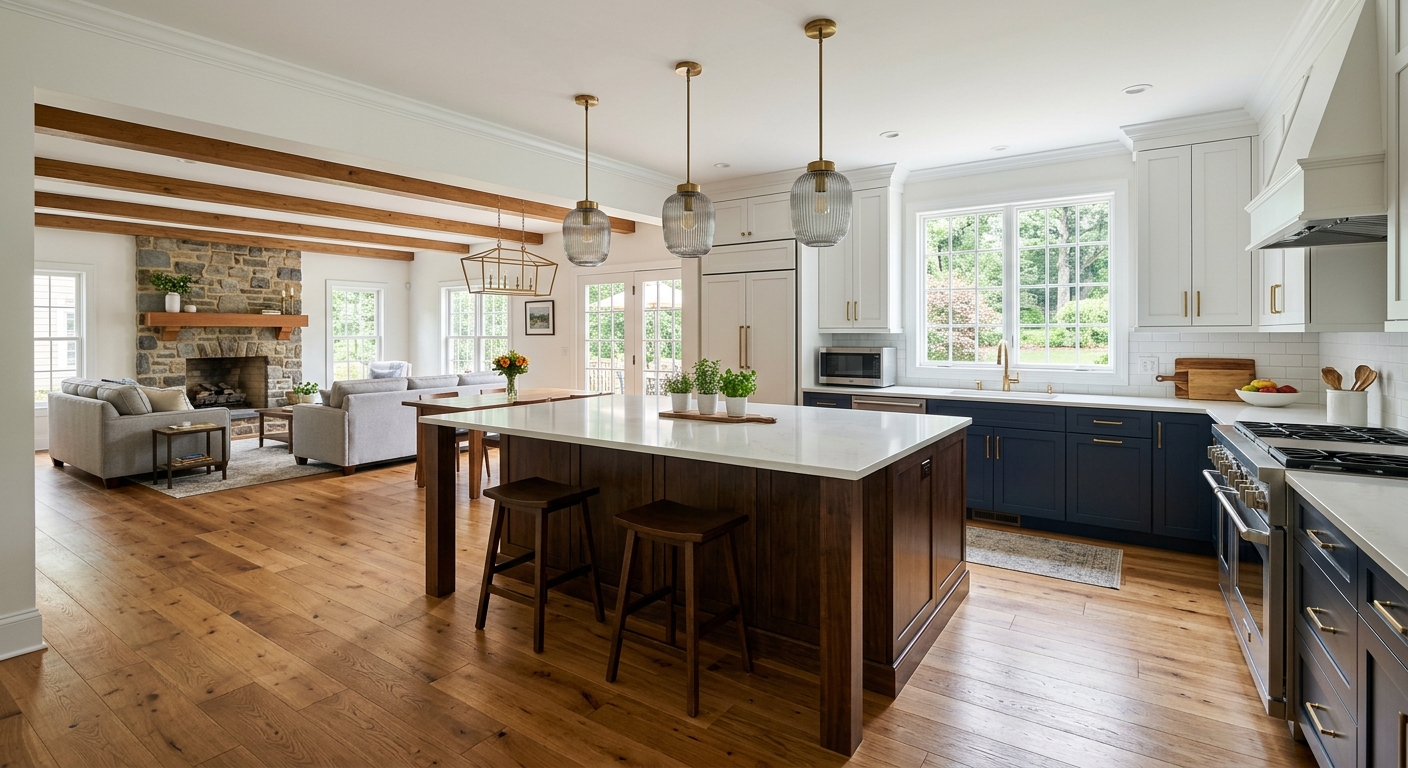
What a kitchen remodel costs in Coolbaugh
In Coolbaugh, planning a kitchen renovation starts with getting real about costs—and that starts with the local market. With a homeownership rate of 81.3% and a median household income of $72,500 (U.S. Census Bureau, ACS 2024), most kitchen buyers here are people improving a home they plan to live in, not flipping for short-term gain. The bulk of Coolbaugh’s homes were built in the late 1990s and early 2000s, so many kitchens are now at the end of their original builder-grade lifecycle. That usually means a full gut remodel—taking everything down to walls and rebuilding with new cabinets, appliances, counters, and flooring. Unlike 1950s houses that need walls moved just to function, these layouts often work as-is but are ready for an upgrade in both finishes and function.
The biggest mistake is budgeting based on one tier of renovation and then choosing a scope from another. For example: pricing for a cabinet refacing, then deciding mid-project to change the layout, which involves moving electrical or plumbing and opens a much higher price and longer timeline. Below you'll find a table outlining the typical scopes, durations, and what you get for your money in Coolbaugh.
| Scope |
What's included |
Duration |
Price range |
| Full gut remodel, same layout |
cabinets, counters, appliances, flooring, lighting, fixtures |
6–10 weeks |
$29,000–$117,000 |
| Gut plus layout change |
all of the above plus moved plumbing, electrical, walls |
10–16 weeks |
$63,500–$117,000 |
| Cabinet replacement (stock to semi-custom) |
remove and install cabinets, hardware, patching |
1–3 weeks |
$6,800–$29,000 |
| Cabinet refacing |
new doors and drawer fronts, veneer, hardware |
3–6 days |
$6,800–$19,500 |
| Countertop replacement only |
template, fabricate, install, reconnect sink |
1–3 weeks |
$3,900–$15,500 |
| Kitchen flooring only |
remove existing, install new flooring |
3–6 days |
$4,900–$19,500 |
Estimates for a typical Coolbaugh kitchen. Cabinet grade and whether the layout changes move these figures more than square footage.
Defining your scope before you get quotes
The word “kitchen remodel” in Monroe County covers everything from a weekend paint job to a six-figure gut. You need to decide your tier before you ever call a contractor—because most contractors price by scope, and if your scope is fuzzy, so are your numbers.
- Cosmetic refresh: Paint, cabinet hardware, maybe new lighting, and a fresh backsplash. No cabinets or major fixtures move. This is what people do to sell or to buy some time before a major fix.
- Pull and replace: The layout stays. You’re ripping out old cabinets, counters and appliances, installing new in the same places, minimal work behind the walls. Electrical and plumbing are usually untouched. This is where most Coolbaugh homes from the 2000s find themselves now.
- Gut, same layout: Everything comes out down to the studs. You might upgrade wiring, patch or replace drywall, insulate an exterior wall, and fit everything back where it was. Old houses (pre-1980) in the area that never had proper updates usually need this.
- Layout change: You move walls, appliances, plumbing, or electrical. Want to open a wall or put the refrigerator somewhere new? This is it. This triggers design work, permits, sometimes engineering, and it is where the price and timeline jump substantially.
The cost cliff in Coolbaugh is hard and steep between "gut, same layout" and "layout change." Moving a sink or range introduces both permitting and a different level of labor. Decide your scope before you invite bids, or you’ll be left comparing apples to oranges—and getting unreliable prices as a result. A reputable contractor in Monroe County can’t even guess your numbers before knowing which scope you want.
Eight weeks without a kitchen
Few people consider what it really means to live through a full kitchen renovation in Coolbaugh, where an 8-week timeline is not unusual for a gut remodel. You should expect to set up a temporary kitchen, usually in a dining room or finished basement: move your fridge close by, plant a folding table with a microwave and kettle, and get used to washing up in the laundry or half-bath sink. Paper plates and takeout will become your standard. It is not glamorous, and your grocery and dining bills will spike—often by more than the new flooring itself.
Dust control in Monroe County matters more than people expect, even with zip walls and plastic sheeting. Demolition in these builder-grade kitchens can kick up insulation, drywall, and old adhesives no matter the age of the home. Staging all the new cabinets and counters means you’ll also surrender a portion of the garage or driveway to dumpsters and deliveries. The door will be open more than you’d like: plan for pets and zone off safe spaces for kids. For the week of demolition, some families do temporarily relocate, especially if noise or dust is a health concern.
In short, eight weeks without a kitchen is its own hidden cost. Budget as much as $2,500–$4,000 extra for eating out, supplies, and the stress relief that comes from having a backup plan.
What requires a permit in a kitchen renovation
Knowing what work triggers a building permit—and what doesn’t—makes a big difference in Coolbaugh and the surrounding Monroe County townships. Replacing cabinet hardware, painting, or updating your backsplash typically does not require a permit. Neither does refacing cabinets or swapping out a countertop if the plumbing and electrical remain unchanged. A permit is generally triggered if you add or move electrical circuits, reroute plumbing, or alter any walls. For example, moving the sink or shifting an island to a new location crosses into permit territory.
In Stroudsburg Borough, as detailed in Monroe County standards, a permit is definitely required for any renovation that moves plumbing or adds new electrical circuits. Code enforcement is handled by your local code office—the township, borough, or designated county authority inspects the work. Expect at least one rough and one final inspection if your renovation includes new wiring or water lines.
For any kitchen project over $500 in Pennsylvania, your contractor must have active Home Improvement Contractor (HIC) registration issued by the Office of Attorney General—verify your contractor at hic.attorneygeneral.gov. All employers are also required to provide workers’ compensation, which you can verify through WCAIS (wcais.pa.gov). If you skip the permit on substantial work, you risk serious resale issues—unpermitted work often comes up in township resale certificates and can delay or even derail a home sale. Don’t hand over a deposit to anyone unwilling to talk about permitting in detail.
Does a kitchen renovation pay back in Coolbaugh?
Most Coolbaugh homeowners renovate to enjoy the space, not just to flip. The truth: a full kitchen renovation rarely returns every dollar spent at resale. Well-done, mid-range projects tend to boost selling price and attract buyers, but high-end projects—especially those out of scale with the median household income of $72,500—almost never pay back the difference.
If you’re renovating to sell, stick to the basics: neutral finishes, sensible layouts, stock or semi-custom cabinets, and don’t push into premium-price territory. Buyers in Monroe County pay for a clean, functional kitchen, not for imported hardware or waterfall-edge counters. On the other hand, if you’re renovating to stay for ten years, aim the budget at what makes daily life better: splurge on the island if that’s where your family gathers, but don’t expect the next owner to value it the same way.
Renovating above the neighborhood’s comfort level is a losing game in Coolbaugh. Over-improving for resale is money left on the table. Focus on quality work at the middle price points and remember: the best return is a faster sale, not a dollar-for-dollar payback.
Why the contingency exists
Coolbaugh’s housing boom from 1990 to 2010 means most local kitchens are second-generation builder-grade—not antique, but aging together. If your home is newer, expect stock cabinets reaching the end of their life, original low-end appliances, and laminate counters. These kitchens usually have just enough electrical circuits for code at the time, which may be too few for today’s needs. Particleboard boxes are common and rarely survive a refit. Plumbing is typically modern, but you may find plastic piping or substandard valves when you open up the walls.
If you own one of the 29.9% of Monroe County homes built before 1980, keep a higher contingency. Demolition often turns up walls out of plumb, floors out of level, ungrounded electrical, or leftover galvanized pipes. Correcting these can add anywhere from $2,000–$8,000 for electrical upgrades, $1,500–$4,000 for plumbing, and $2,500–$7,500 if structure needs corrections. Lead paint is regulated in pre-1978 homes—federal EPA Lead RRP Rule applies, so testing and safe practices are mandatory before disturbing old surfaces. Asbestos tile may also appear, though the main risk is if it is disturbed.
That’s why a 10–15% contingency is not padding—it’s protection. The surprises you don’t see on day one are the ones that stop projects cold and blow up budgets fast.
How a Coolbaugh kitchen budget breaks down
Seeing where the money actually goes in a Coolbaugh kitchen renovation resets nearly everyone’s priorities. The largest portion—typically 25–35%—goes to cabinetry. Labor comes next, and if the floorplan changes, installation costs quickly rise. Countertops and appliances often jockey for the third spot, with wide swings depending on your choices. Flooring, lighting, and plumbing fixtures fill smaller slices, but skipping quality here is easy to regret.
Many homeowners in Monroe County forget the two categories most likely to sink their budget: contingency for surprises, and the soft costs—permits, design consultations, delivery fees, and disposal. Skipping these lines just guarantees unpleasant surprises.
Spend an extra thousand dollars on better cabinet construction or local fabrication, and you’ll see the payoff every day. Spend that same amount upgrading to a commercial-brand range with stock cabinets, and all you get is a resale mismatch. Flooring and lighting are worth the modest upgrades in this market, but spending big here won’t move your home’s value much.
For a typical full kitchen gut in Coolbaugh ($29,000–$117,000), this is how the budget really shakes out:
| Category |
Share of budget |
Notes |
| Cabinetry |
25–35% |
the largest line and the longest lead time |
| Labour and installation |
20–30% |
rises sharply if the layout changes |
| Countertops |
8–15% |
material choice drives the swing |
| Appliances |
10–20% |
widest range of any category |
| Flooring |
5–10% |
|
| Lighting and electrical |
5–10% |
higher in older homes needing circuits |
| Plumbing and fixtures |
4–8% |
|
| Permits, design, disposal |
3–6% |
usually forgotten in early budgets |
| Contingency |
10–15% |
not optional in a pre-1980 house |
Frequently asked questions — kitchen renovation in Coolbaugh
Should I renovate before selling or let the buyer do it?
Buyers in Coolbaugh often prefer move-in ready kitchens, but not at any price. If your kitchen is clearly at the end of its life—original cabinets, worn counters, dated appliances—a cosmetic refresh or a basic cabinet replacement ($6,800–$29,000) can help sell your house faster and for more. Don’t spend for your dream design if you don’t plan to stay. Stick with neutral colors, basic fixtures, and stock counters if resale is your goal. If your kitchen works and shows decently, the next owner may want to personalize it anyway; in that case, a deep clean and minor repairs are all you need. With Coolbaugh’s median income, over-improving right before listing rarely pays back: tackle the must-fixes, skip luxury upgrades, and weigh your return in time saved on the market, not dollars added.
Does replacing cabinets require a permit?
In most Monroe County townships including Coolbaugh, replacing cabinets with new ones in the same layout does not trigger a building permit, provided plumbing and electrical are untouched. If you keep your sink and stove in the same spots and don’t add circuits, you can proceed with cabinet replacement ($6,800–$29,000) without municipal paperwork. However, if you want new lighting, more outlets, or plan to relocate appliances that require moving wires or pipes, you will be required to pull a permit. Always check with your township code office before starting. While painting and simple hardware swaps are unregulated, major changes can lead to headaches—unpermitted upgrades might come back to bite during future resale.
Do older Coolbaugh homes need electrical upgrades for a kitchen?
Yes, if your Coolbaugh home was built before 1980 (29.9% are), most kitchens need electrical updates during a significant remodel. Modern appliances, more lighting, and code-required circuits far exceed what was standard even 30 years ago. You may discover outdated ungrounded outlets, two-prong receptacles, or simply too few circuits for safety and function. Upgrading the kitchen branch wiring often adds $2,000–$8,000 to a typical gut job ($29,000–$117,000 total), but it’s not the place to cut corners—insurers and resale buyers expect it. Newer, 1990–2010 builder-grade homes usually just need a circuit or two added for countertop appliances, not a full rewire.
Do I need to change my kitchen layout?
In most Coolbaugh homes built during the 1990–2010 boom, layouts are open enough for modern living—it’s the finishes and storage that fall short. Changing the layout (moving sink, range, or removing walls) triggers a much larger project, both in time and cost ($63,500–$117,000). Unless the design is truly dysfunctional, most homeowners here choose to keep the basic footprint and focus their budget on cabinets, countertops, and appliances. If traffic flow is bad, storage is impossible, or you lose sleep over a wall, it may be worth it, but for most, a smart pull-and-replace is the better value. Start with design updates and only escalate to a layout change if you can’t solve your issues with finishes alone.
How do I set up a temporary kitchen?
In Coolbaugh, where lead times can stretch due to contractor demand, setting up a temporary kitchen is crucial for survival during a gut remodel. Move your fridge to an accessible room, set up a folding table with a microwave, toaster, and coffee maker, and use your laundry or bathroom sink for washing dishes. Keep the cooking simple—sandwiches, meal kits, and ready-made salads are staples for most families during the 6–10 weeks without a functioning kitchen ($29,000–$117,000 for a full gut job). Be ready to use paper plates and plastic utensils, and expect higher food costs. Dust and debris will migrate, so seal off living spaces with plastic and keep pets and small children well clear. Many homeowners say a temporary kitchen is what kept their renovation bearable.
Why is there a gap after cabinets are installed?
After new cabinets go in, small gaps between the boxes and the wall, ceiling, or floor are common—even in new Coolbaugh homes. Houses here from the Pocono boom years were mostly built with builder-grade precision, which means walls and floors are rarely perfectly square or level. Installers shim, level, and plumb everything as best as possible, but the gaps left are filled with trim—crown molding at the top, base trim at the bottom, and scribe moldings for the sides. This is factored into both cabinet replacement ($6,800–$29,000) and full gut projects, and actually signals the job was carefully installed. If your contractor isn’t using trim, they’re skipping a step that helps the whole kitchen look finished and protects against shifting over time.
What does a full gut kitchen remodel cost in Coolbaugh?
A full gut kitchen remodel in Coolbaugh costs between $29,000–$117,000, with most typical projects landing around $63,500. This covers demolition down to the studs, all-new cabinetry, countertops, appliances, new flooring, and updated lighting and fixtures. The big spread comes from material choices—stock vs. semi-custom cabinets, laminate vs. stone counters, basic vs. premium appliances—and whether you keep the same layout or move walls, plumbing, or electrical. Labor rates in Monroe County can also stretch timelines and budgets, particularly in busy seasons. Most homeowners here, with median incomes near $72,500, opt for solid mid-range finishes and layouts, reserving the upper end of the range for full custom work or significant structural changes.
What countertop material is best for a family kitchen?
In Coolbaugh, most family kitchens are better served by quartz or post-formed laminate countertops. Quartz offers a blend of durability, stain-resistance, and easy maintenance—perfect for daily spills, heavy cookware, and kids. The cost typically ranges from $3,900–$15,500 installed. High-end granite and solid-surface materials are available but tend to push your renovation budget higher without much day-to-day payoff. Laminate is the budget-conscious choice: it won’t win design awards, but it’s tough, affordable, and comes in dozens of patterns. Butcher block and solid wood have a classic look, but require regular maintenance and aren’t as forgiving as quartz for active families. For most Coolbaugh homes, quartz is the material that covers all the functional needs without over-spending.
What is a realistic contingency for a Coolbaugh kitchen?
A smart contingency for a kitchen renovation in Coolbaugh is 10–15% of your total budget, or roughly $2,900–$17,500 within the local price band ($29,000–$117,000). In homes built before 1980, lean toward the higher end of that range—old wiring, odd framing, and even lead paint or asbestos tile aren’t rare and can derail the best-planned schedule. For newer, builder-grade kitchens from the 1990–2010 boom era, issues pop up less often, but hidden plumbing leaks, off-level floors, or manufacturer backorders can still hit. Never treat contingency as negotiable or padding; it’s your safety net for surprises behind the walls or scheduling curveballs in Monroe County’s tight labor market. If your initial quotes leave no room for contingency, you’re setting yourself—and your crew—up for stress and overruns.