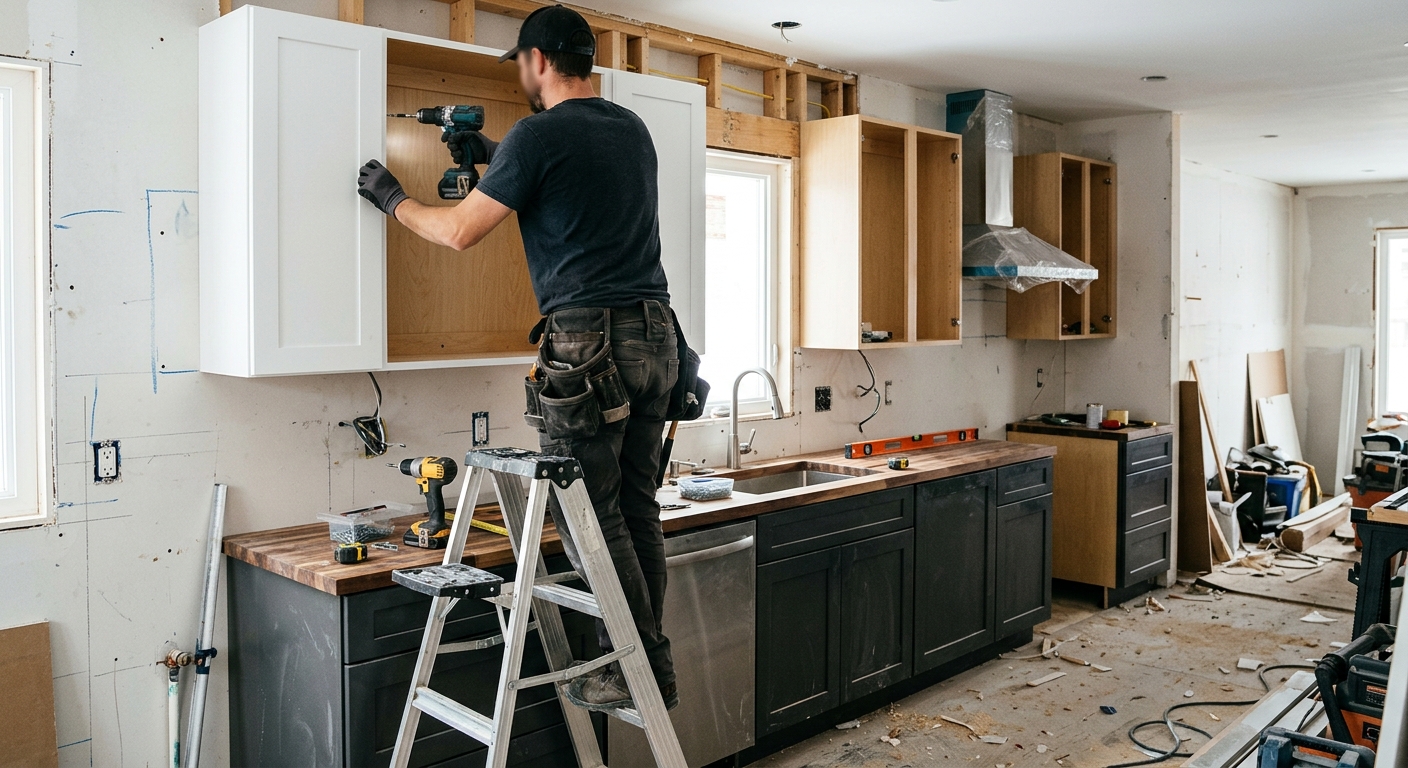
Kitchen renovation costs in Brentwood — 2026
Brentwood’s kitchen renovation budgets in 2026 reflect both the typical homeowner’s resources and the style of homes common to the area. With a median household income of $57,900 and a homeownership rate over 64% (U.S. Census Bureau, ACS 2024), renovation budgets lean into midrange options, but there’s a wide span. Older homes dominate the area—nearly 97% built before 1980—meaning many kitchens are due for full-gut remodels instead of simple cosmetic touch-ups. This is especially true for homeowners dealing with small, compartmentalized rooms originally built in the pre-1940s era, as seen throughout Pittsburgh and adjacent boroughs like Brentwood. Expect costs to climb quickly when you move beyond surface changes. Most blown budgets come from pricing a basic “pull and replace” job and then choosing a scope that involves moving electrical or plumbing, triggering higher costs for labor, engineering, and permits.
| Scope | What's included | Duration | Price range |
| Full gut remodel, same layout |
cabinets, counters, appliances, flooring, lighting, fixtures |
6–10 weeks |
$28,000–$113,000 |
| Gut plus layout change |
all of the above plus moved plumbing, electrical, walls |
10–16 weeks |
$61,000–$113,000 |
| Cabinet replacement (stock to semi-custom) |
remove and install cabinets, hardware, patching |
1–3 weeks |
$6,600–$28,000 |
| Cabinet refacing |
new doors and drawer fronts, veneer, hardware |
3–6 days |
$6,600–$19,000 |
| Countertop replacement only |
template, fabricate, install, reconnect sink |
1–3 weeks |
$3,800–$15,000 |
| Kitchen flooring only |
remove existing, install new flooring |
3–6 days |
$4,700–$19,000 |
Estimates for a typical Brentwood kitchen. Cabinet grade and whether the layout changes move these figures more than square footage.
Code requirements for Brentwood kitchens
For Brentwood residents, most purely cosmetic kitchen work—paint, hardware, refacing doors, or swapping a countertop (without changing the sink location)—doesn’t require a permit. When you step into significant territory, like moving plumbing or electrical lines, opening a wall, or installing a new mechanical range hood, you’re likely to need a building permit, especially in areas modeled after Pittsburgh’s policies. In Pittsburgh itself, any change to structural walls or the relocation of plumbing or electrical lines reliably triggers the permit process, and full kitchen remodels with layout changes will undergo plan review by the relevant department.
Electrical inspections are performed under the City of Pittsburgh permitting authority, but some nearby suburbs—including boroughs surrounding Brentwood—may use approved third-party inspection agencies. This is worth confirming up front, as it’s a local twist that surprises many. Home improvement contractors working on projects over $500 must have Home Improvement Contractor (HIC) registration issued by the Pennsylvania Office of Attorney General—always verify at hic.attorneygeneral.gov. Every employer is required to carry workers' compensation insurance (verify through WCAIS at wcais.pa.gov).
If you skip permits or inspections on anything requiring one, you risk costly problems at resale—unpermitted renovations must be disclosed and can stall or even derail a home sale in Brentwood or the rest of Allegheny County.
Why the electrical line grew
The biggest unplanned cost during kitchen projects in Brentwood comes from electrical upgrades. The current code under the Pennsylvania Uniform Construction Code expects your kitchen to have: at least two dedicated 20-amp small-appliance circuits just for countertop outlets, GFCI protection wherever you could set a toaster, outlets spaced every four feet, a dedicated circuit for your dishwasher, one for the disposal, another for the microwave, and often a 240-volt line for an electric range. Add undercabinet lighting or a steam oven, and the tally climbs.
Most Brentwood homes—like nearly 97% of the housing stock in the area—were built before 1980 (U.S. Census Bureau, ACS 2024). Many still have two-wire, ungrounded circuits, kitchen plugs tied to lighting, or even aluminium branch wiring. Panels from this era are rarely sized for more circuits. Once walls are open and a permit is in play, inspectors expect the kitchen electrical to meet today’s code. There’s no negotiating to “leave the old stuff alone” when you’ve exposed wiring; you’re required to bring it up to compliance.
Budget to bring the kitchen electrical up to code ranges from $3,800–$15,000, with the upper end typical in homes where the panel needs upgrading or circuits need to be added all the way from the basement. The reality is, few older Brentwood kitchens get renovated without touching electrical—so price it into your plan up front.
General contractor, kitchen firm, or manage it yourself?
Every Brentwood kitchen renovation starts by choosing who’s in charge. A design-build kitchen firm handles the entire process: design, product selection, cabinets, installation, and handoff. This route has the highest cost, but also the lowest risk of missed steps and schedule slip, and gives you one company to call when anything needs adjusting. A general contractor model splits the work: you or a hired designer pick layout and finishes, while the GC coordinates trades, schedules, and ensures the build meets code. It’s less expensive than a full-service kitchen firm but means more hands-on involvement for you—especially making decisions promptly when issues arise.
Owner-managed jobs—where you hire an electrician, a plumber, a carpenter and manage the schedule directly—offer savings because you’re not paying a markup on each trade. But this is where projects in Brentwood most often run aground. The local finish-trade labor market is tight (a direct result of Pittsburgh’s large, aging housing stock and consistently high renovation demand), so experienced subcontractors often give priority to established firms over individual owners. Scheduling conflicts can leave your kitchen torn up for longer than you plan, and delays affecting one trade often ripple through the rest.
If your project needs a permit (most do once you move a wall or any major plumbing/electrical), and you work full-time, self-managing is not realistic—substantial time is needed on site to answer questions or troubleshoot. For most Brentwood homeowners, sticking with a reputable GC or kitchen firm saves more headaches than the money you’ll save doing it yourself.
Defining your scope before you get quotes
The term “kitchen remodel” covers a lot of ground in Brentwood—everything from a $5,000 paint and hardware refresh to over $100,000 for a gut renovation with a new layout. The smartest way to avoid surprises is to sort your project into one of four tiers before you call anyone for quotes.
- Cosmetic refresh: Paint, replace cabinet knobs, new backsplash, better lighting. No cabinet or major layout changes. Used for prepping a house for sale or stretching an aging kitchen a few more years.
- Pull and replace: All new cabinets and counters, keeping the existing kitchen footprint. Plumbing and electrical generally stay put. Good for functional layouts where the look is tired but the space works.
- Gut, same layout: Down to studs, all services brought up to code but left in place. Common in older Brentwood homes where wiring or plumbing are unsafe or outdated, but the room’s configuration is solid.
- Layout change: Moving walls, doorways, plumbing, or installing a larger window. This jumps cost dramatically thanks to permits, plan review, specialty contractors, and sometimes engineering for structure.
The price jump between gutting and a true layout change is steep because moving a range or sink brings every trade and every inspector to your project. Before you contact anyone, pick your tier—contractors can’t give meaningful estimates until you’re clear on whether you’re just updating finishes or physically reconfiguring the room. Many budgets in Brentwood—and the rest of Allegheny County—get busted by homeowners who plan at the “pull and replace” level and end up approving a wall move or island after demo. Align your wish list with your scope before you get a quote; it saves frustration for both you and your contractor.
Quartz, granite, laminate or butcher block
Countertop selection in Brentwood kitchens is as much about daily use as it is about looks. Quartz has taken over for many homeowners: it’s engineered, non-porous, resistant to stains and scratches, and never needs sealing—but it’s sensitive to high heat. Place a hot pan directly on quartz and you can discolor or crack it. Granite is natural, handles heat well, but needs periodic sealing to resist stains—if you don’t mind that maintenance, it’s time-tested. Laminate—often dismissed—has improved dramatically; it resists most stains, hides seams better than stone, is affordable, and repairs reasonably well if nicked. For rentals or modest kitchens, laminate is never something to apologize for.
Butcher block is visually warm and good for some tasks but demands sealing and isn’t forgiving to standing water near the sink. It scratches and stains, but sanding can restore it. Solid surface materials—like Corian—can also be sanded out if scratched but don’t like high heat or cutting directly on them.
Fabrication and installation push prices: edge profiles, sink and range cutouts, and whether seams fall in sight lines all matter. Most stone and solid surface counters need a precise template visit, not just a tape measurement, to fit Brentwood’s old, less-than-perfect walls. If you’re tempted by a material but the price is stalling you, opt for a basic edge or skip the waterfall waterfall ends; the material is just part of the equation.
Why appliance selection comes first
Choose your appliances before anything else—Brentwood kitchens prove this every year. Cabinets are ordered and cut to fit the exact size of refrigerators, ranges, and dishwashers. If you pick appliances after signing off on cabinets, you can easily end up with a fridge that won’t open against a wall or a range that sticks out into the walkway.
Standard-depth refrigerators usually extend past the cabinets, while counter-depth models are built to sit flush—changing the look and affecting cabinet side panel sizing. Slide-in ranges (no rear lip) need a countertop opening and a finished wall behind them; freestanding ranges can go anywhere, but leave a gap. Upgrading to induction or a professional-style gas range means planning for more power or a gas line—these sometimes require a panel upgrade or a new vent in Brentwood’s older homes. Panel-ready dishwashers and fridges are beautiful, but require earlier cabinet planning. Always choose your venting: a ducted hood to the outside is best, but sometimes recirculating is the only option; just know it sacrifices odor and grease removal.
Professional-grade brands offer aesthetic cohesion and robust builds, but the price premium is more about look and feel than cooking ability for most home use. Lead times for appliances—especially specialty models—can now exceed even custom cabinet orders, so get your selections locked in before you finalize any cabinet plan.
Frequently asked questions — kitchen renovation in Brentwood
Should I hire a general contractor or a kitchen firm?
For most Brentwood kitchen renovations, hiring a general contractor or a kitchen firm is the safer bet, especially if your project triggers a permit or involves moving plumbing or electrical. A kitchen firm offers a single point of responsibility—they handle design, product selection, and installation—best if you want the least hassle and are willing to pay a premium. A general contractor is the right fit if you’ve already chosen your finishes or have a designer, and need one person to coordinate the trades and keep work moving. Owner-managing can save money but is rarely practical if you have a day job or if your project’s scope is more than cosmetic; the finish-trade labor market in the Pittsburgh area means owner-managed jobs are often delayed. For a full remodel, expect costs to start around $28,000 even before layout changes.
What does a quartz countertop cost in Brentwood?
Quartz countertops in Brentwood generally fall into the mid to upper band for countertop installations. For template, fabrication, and installation—including reconnecting the sink—you can expect to pay between $3,800–$15,000, with most jobs coming in around the $8,500 mark for an average kitchen. Costs move higher if you want an integrated sink, thick edges, or a full-height backsplash. While that’s a real investment, quartz’s low maintenance and resistance to stains or scratches saves time over granite or butcher block. In Brentwood’s mostly pre-1980 homes, expect another bump in cost if countertops need additional shimming or walls aren’t square; older homes rarely have easy installs.
What should I expect in a pre-1980 Brentwood kitchen?
Most Brentwood kitchens were built before 1980, and with that comes narrow footprints, limited circuits, and sometimes original plumbing and plaster. You’re likely to find two-wire electrical (without grounds), shared outlets, minimal insulation, and sometimes framing that doesn’t meet current standards. If you plan a gut renovation, bringing electrical and plumbing to code will be required once walls are open—a major source of budget increase. A full gut remodel in this context typically ranges from $28,000–$113,000 depending on scope and material choices. Structural concerns, like misaligned hardwood floors or sagging ceiling joists, are also common surprises in Brentwood’s older homes, so build in some contingency if you’re tackling a full tear-out.
How long does a kitchen renovation take in Brentwood?
The timeline for a kitchen renovation in Brentwood depends directly on your project’s scope. Cosmetic refreshes and simple cabinet refacing run 3–6 days. Replacing cabinets and counters but staying within the existing layout generally takes 1–3 weeks. A full gut renovation (down to studs, everything new but in the same footprint) can stretch 6–10 weeks, and if you’re moving walls or plumbing, plan on 10–16 weeks start to finish. Aiming for the shortest duration is tempting, but allowing a buffer is smart given the labor market for trades in the Allegheny County core; crew schedules can shift without warning. If you’re budgeting for a timeline, factor in inspection schedules and any periods where the kitchen will be totally unusable. For a full gut plus layout change, expect to spend in the band of $61,000–$113,000 and be without a kitchen for over two months.
Is a cosmetic refresh enough or do I need a gut remodel?
For some Brentwood homes, where the kitchen layout works and the structure is basically sound, a cosmetic refresh—paint, hardware, lighting, maybe a backsplash—can buy years of additional use for a fraction of the price. But if your kitchen has persistent electrical issues, original plumbing, or visible moisture problems, a surface fix will only hide the deeper issues. Once wiring or plumbing is unsafe or nonfunctional, it makes sense to gut and rebuild to today’s standards. Cosmetic updates cost little—a flooring replacement is usually in the $4,700–$19,000 band—and are perfect for prepping a house for sale. If you’re planning to stay, or if you see real safety deficiencies, a full teardown is the smarter investment and protects long-term home value.
What flooring works best in a kitchen?
The best kitchen flooring for Brentwood homes is one that stands up to water, spills, heavy foot traffic, and constant cleaning—without driving project costs unnecessarily high. LVP (luxury vinyl plank) and tile are the most popular in the area, thanks to their water resistance and durability. Wood looks great and is warm underfoot but needs more maintenance, especially with Brentwood’s frequency of freeze-thaw and ground moisture. For most projects, installing kitchen flooring costs between $4,700–$19,000 including removal and installation. If you’re on a tight budget or installing in a rental, modern sheet vinyl or mid-grade laminate will perform better than most people expect and are reasonable choices in Brentwood kitchens.
How much does a kitchen renovation cost in Brentwood?
Kitchen renovation in Brentwood, Allegheny County, lands all across the board depending on scope. For a full gut remodel (leaving the kitchen in the same layout but new everything), expect to invest between $28,000–$113,000. Replacing just cabinets and counters is closer to $6,600–$28,000. Swapping out countertops only runs $3,800–$15,000. Where the cost climbs is when you move walls, plumbing, or electrical—the band then is $61,000–$113,000. With Brentwood’s median household income at $57,900 (U.S. Census Bureau, ACS 2024), most homeowners prioritize durability and mid-tier finishes, reserving top-end budgets for homes they plan to stay in long-term.
Which upgrades are not worth the money?
Not every kitchen upgrade makes sense for Brentwood homeowners—especially with inflated costs and the realities of the local housing market. Waterfall edge countertops, built-in espresso machines, and pro-grade ranges add flash but don’t return anywhere close to what they cost when you go to sell, unless you’re in the top end of the local price bands. Upgrading cabinetry to expensive custom when stock or semi-custom are suitable adds thousands, but not days of extra function. The same goes for high-end appliances—unless you love to cook daily, you’re often better supported by middle-grade models. Opting for premium solid hardwood flooring where water and dropped pans are daily realities is another place to save; mid-range tile or quality LVP both cost less ($4,700–$19,000 for most kitchen floors) and outlast wood in high-traffic Brentwood kitchens.
Do I need a permit for a kitchen renovation in Brentwood?
Whether you’ll need a permit for your Brentwood kitchen depends on scope. Swapping paint, updating cabinet hardware, cabinet refacing, or replacing counters without changing plumbing or adding circuits typically does not require a permit. But as soon as you touch structural walls, move plumbing, or add/move electrical lines, a permit is needed—following the pattern in Pittsburgh and almost all Allegheny County boroughs. For major remodels, plan review and inspections are a fact of life. Doing work without permits can stall your home sale or force expensive tear-outs later on. The cost of pulling permits is a small fraction of a full gut remodel, which ranges from $28,000–$113,000; skipping this step risks much more at the end.